
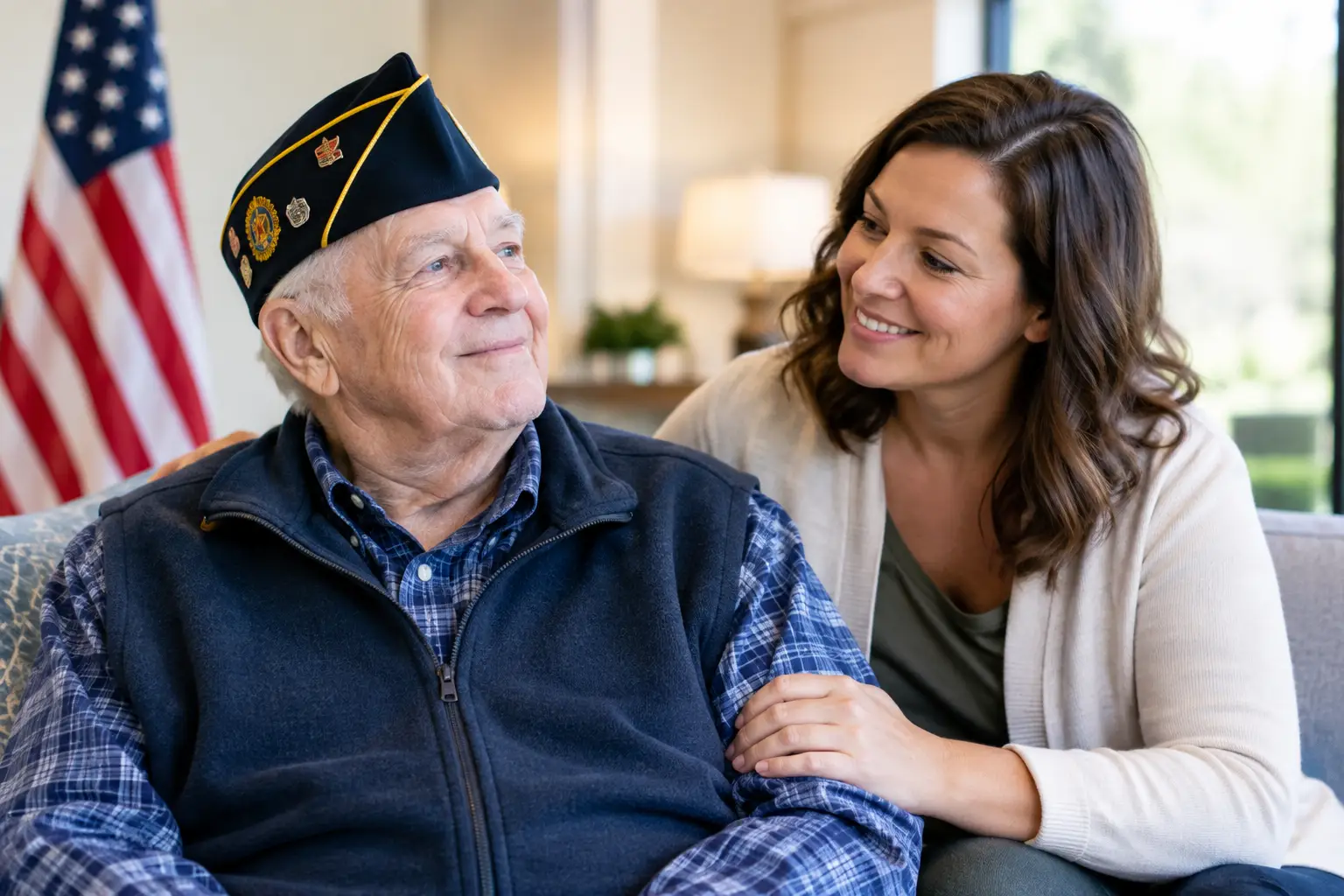
A military career can shape a lifetime, yet many veterans and their families are surprised by how difficult it can feel to find affordable, respectful support later in life. This veteran housing guide is designed for families who are balancing a loved one’s care needs with the desire to protect their comfort, dignity, and independence.
The right answer is rarely just about finding a place to live. It is about finding daily support that feels dependable, a community that feels welcoming, and a payment plan that makes sense for the family’s real circumstances. Whether your loved one needs occasional help, full assisted living support, or a secure memory care setting, understanding the available options can make the next step feel far more manageable.
Veteran Housing Guide: Begin With the Level of Care
Before comparing communities or applying for benefits, take an honest look at what support is needed each day. Many families begin their search after a fall, a hospitalization, missed medications, weight loss, wandering, or caregiver exhaustion. Those moments are stressful, but they can also clarify that living alone is no longer the safest or most comfortable choice.
A senior who mainly wants fewer household responsibilities may be well suited for independent senior living. Someone who needs help with bathing, dressing, medication reminders, meals, or mobility may benefit from assisted living. For a veteran living with Alzheimer’s disease or another form of dementia, memory care can provide the added structure, supervision, and secure environment that families need for peace of mind.
Care needs can change over time. Choosing a community that can adjust support when a resident needs more help may reduce the disruption of another move later. During a tour, ask how care plans are created, how often they are reviewed, and what happens if your loved one’s needs increase.
Housing Options for Veterans and Older Adults
Veterans have access to many of the same senior living options as other older adults, along with possible VA programs and veterans-focused resources. No single option is right for every family. Location, medical needs, income, family support, and personal preferences all matter.
Here are the most common paths families consider:
- Remaining at home with support: Home care may work well for veterans who are safe at home and need limited assistance. It can become costly or unreliable when care is needed throughout the day or overnight.
- Independent senior living: This option offers a maintenance-free lifestyle, meals, social activities, and companionship, but usually does not include personal care assistance.
- Assisted living: Residents receive help with everyday activities while maintaining as much independence as possible. Services commonly include meals, housekeeping, medication support, personal care, and life enrichment.
- Memory care: A specialized setting for people with cognitive decline, offering structured routines, trained caregivers, and safety features designed to reduce wandering and confusion.
- Skilled nursing care: This is generally appropriate when a person needs around-the-clock medical oversight or rehabilitation that cannot be provided in assisted living.
For some veterans, a state veterans home may also be worth exploring. Availability, eligibility rules, care levels, and wait times vary, so it is wise to view this as one possible option rather than the only plan.
Understanding VA Benefits for Assisted Living
A common misunderstanding is that the VA directly pays for any senior living community a veteran chooses. In reality, VA support depends on the veteran’s service history, health needs, income, assets, disability status, and the specific program involved.
One of the most discussed programs is the VA pension with Aid and Attendance. For eligible wartime veterans and qualifying surviving spouses, this monthly pension benefit may provide additional funds when help is needed with activities such as bathing, dressing, eating, or managing daily care. It may also apply when a person needs assistance because of cognitive impairment or lives in a supportive care setting.
Aid and Attendance is not automatic, and it is not a separate payment made directly to every assisted living community. Families should expect an application process that includes financial and medical documentation. The benefit can be meaningful, but approval timelines vary, so it should not be the only financial plan in place when care is urgently needed.
Some veterans may instead qualify for disability compensation, which is different from pension benefits. Others may be eligible for a Housebound benefit. In many cases, Aid and Attendance and Housebound benefits cannot be received together, so families should seek guidance before making assumptions about what their loved one can receive.
A Veterans Service Officer or an accredited VA representative can help families understand eligibility and prepare an application. Be cautious of anyone who promises approval, guarantees a certain payment amount, or pressures a veteran to make major financial changes solely to qualify.
Build a Realistic Plan for Care Costs
Monthly senior living costs can feel overwhelming at first, particularly for spouses and adult children who have been covering needs informally at home. A clearer picture often emerges when families compare the full cost of staying at home with the value included in residential care.
At home, expenses may include mortgage or rent, food, utilities, home repairs, transportation, medication management, in-home caregivers, adult day services, and safety modifications. Assisted living typically combines housing, meals, housekeeping, social programming, and personal care into one monthly arrangement, though the exact services and pricing structure differ by community.
Start by gathering reliable financial information: monthly income, savings, retirement funds, long-term care insurance, VA payments, and possible family contributions. If a veteran or spouse may qualify for Medicaid, ask early about eligibility and how it may work with long-term care services in Florida. Medicaid rules can be complex, and coverage may not pay for every housing-related expense, but it can be an essential resource for qualifying families.
The goal is not to choose the least expensive option at any cost. It is to find meaningful value: a setting where your loved one is safe, cared for, engaged, and treated with respect without placing an unsustainable burden on the family.
Questions to Ask During an Assisted Living Tour
A tour should give you more than a look at apartments and dining rooms. It should help you understand how your loved one will be treated on an ordinary Tuesday morning, during an anxious evening, or after a change in health.
Ask who provides personal care and medication support, how staff respond to falls or sudden concerns, and how families are updated. If memory loss is part of the picture, ask how the community manages wandering risks, confusion, sleep changes, and meaningful engagement. Notice whether residents appear comfortable and whether team members speak to them with patience and respect.
It is also appropriate to ask direct financial questions. Request a clear explanation of the base monthly rate, care-level charges, move-in costs, and possible future increases. Ask whether the community accepts veterans benefits, Medicaid, or other payment sources that may help your family. Straightforward answers are a sign that a community respects your need to plan carefully.
Finding Comfort, Dignity, and Value in Central Florida
For families in Ormond Beach, Deltona, Daytona, Port Orange, DeLand, Palm Coast, and surrounding communities, proximity matters. A nearby assisted living or memory care community can make it easier for spouses, children, grandchildren, and longtime friends to remain involved. Familiar visits, shared meals, and regular connection can make a major difference in a resident’s sense of belonging.
Gold Choice Senior Communities helps families explore care options with a focus on comfort, dignity, and value. For veterans and their families, that means having a practical conversation about daily support, available benefits, and what a sustainable care plan can look like – without losing sight of the person behind the paperwork.
If you are beginning this search for a veteran you love, you do not need every answer before scheduling a tour. Bring your questions, share what daily life has become difficult, and let the right community help you see a safer, more comfortable path forward.