
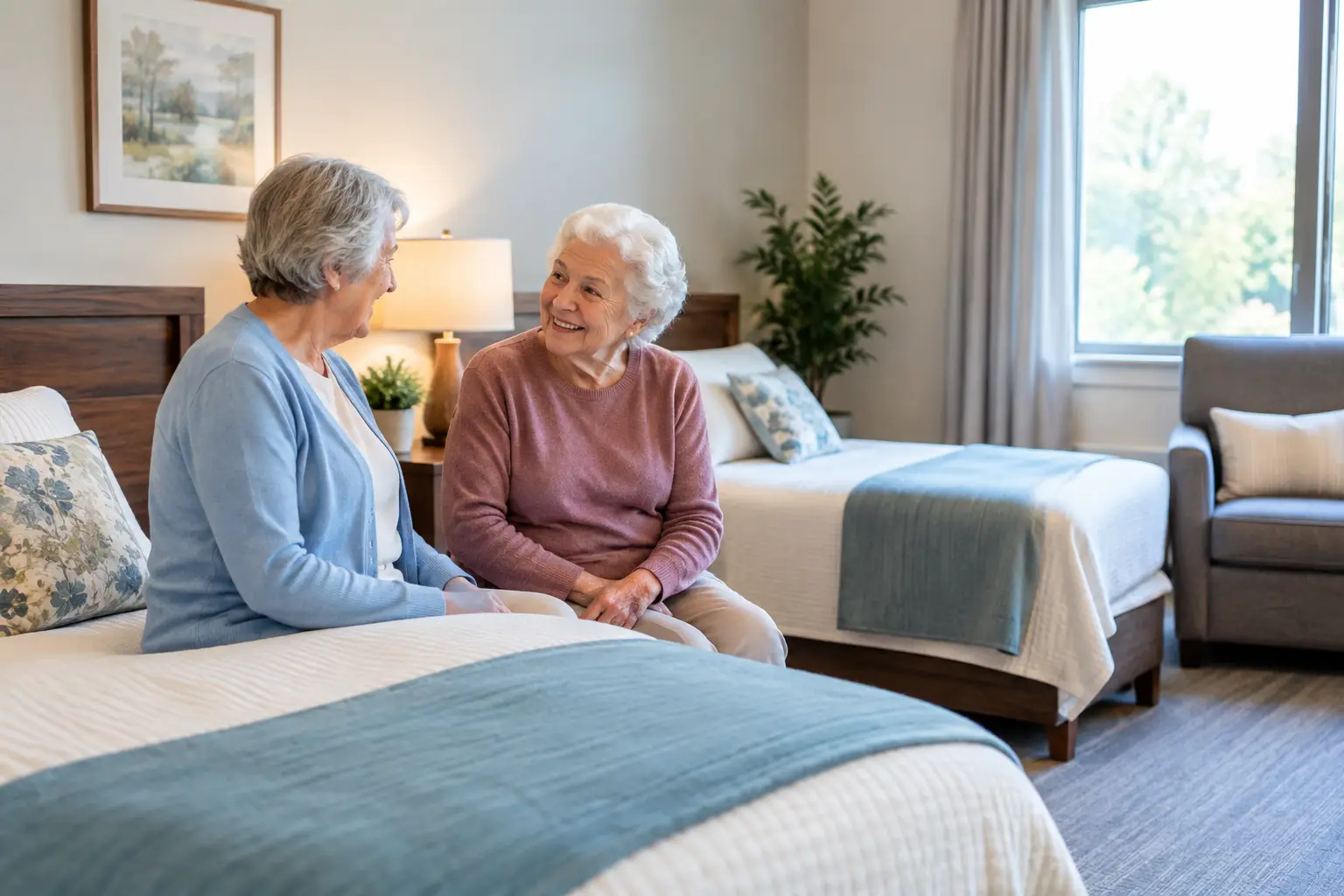
A move to assisted living often comes after a hard season: missed medications, a fall risk, loneliness at home, or a family caregiver who can no longer be available around the clock. An assisted living companion room can make that transition feel less isolating while helping families find a practical balance of comfort, dignity, and value.
A companion room is typically a shared or semi-private residence where two residents have their own sleeping and personal space within one room or suite. It is not simply a way to lower monthly costs. For the right person, it can bring daily conversation, reassurance during a new routine, and the comfort of knowing someone is nearby.
Still, sharing a room is a personal decision. The best choice depends on your loved one’s personality, care needs, sleep habits, preferences, and financial situation. A thoughtful tour and an honest conversation with the community can help your family decide what will feel most like home.
What Is an Assisted Living Companion Room?
In an assisted living companion room, residents share a living space while receiving the same core support available throughout the community. That may include help with bathing, dressing, medication management, mobility, meals, housekeeping, laundry, and life enrichment activities, based on each resident’s individualized needs.
The layout varies by community. Some companion rooms include separate bedroom areas, while others are one larger shared room with clearly defined personal spaces. Bathrooms may be shared or arranged differently depending on the apartment design. During a visit, families should ask to see the actual room type being considered rather than relying only on a floor plan.
A well-planned shared room should still give each person a sense of ownership. Personal furnishings, favorite photos, a familiar blanket, and a comfortable chair can help a new resident settle in. The goal is not to make someone feel like a guest in another person’s space. It is to create a home where both residents are treated with respect.
Why Some Seniors Thrive With a Companion Room
For many older adults, the hardest part of moving is leaving behind familiar routines and everyday companionship. A roommate can ease those first weeks by providing a friendly face at breakfast, a partner for activities, or simply another person in the room at night.
This can be especially meaningful for seniors who have recently lost a spouse, live far from family, or have spent long periods alone. Shared living may encourage residents to join meals, attend activities, and stay engaged with the larger community. It cannot replace family relationships, but it can reduce the quiet moments that sometimes make a move feel overwhelming.
A companion arrangement may also provide value for families comparing assisted living costs. Semi-private accommodations are often priced differently than private rooms, making quality residential care more attainable for families working within a set budget. For those exploring Medicaid or veterans benefits, room availability and payment options should be discussed directly with the community, since eligibility and coverage details can vary.
At Gold Choice Senior Communities, families can discuss care needs, room preferences, and possible funding pathways with a team focused on practical guidance as well as compassionate care. Asking early about available options can prevent unnecessary stress later.
When a Shared Room May Not Be the Best Fit
A companion room is not automatically the right choice for every senior. Someone who strongly values privacy, has a highly irregular sleep schedule, or becomes easily overstimulated may feel more comfortable in a private room. A person who needs frequent nighttime assistance may also need a setting that supports rest and safety for both residents.
Health and memory needs matter, too. In memory care, a shared room can work well for some residents, particularly when it creates familiarity and companionship. For others, cognitive changes can make sharing space confusing or upsetting. The care team should consider each person’s routines, behaviors, communication style, and ability to feel secure in the environment.
Families should also recognize that compatibility cannot be guaranteed. Communities generally make roommate decisions carefully, considering factors such as gender, mobility, interests, personality, and daily routines. Even with a thoughtful match, people can need time to adjust. It is reasonable to ask what happens if the arrangement does not work well and whether another room option could become available.
Questions to Ask About an Assisted Living Companion Room
A tour is the best time to move beyond general descriptions and ask how shared living works in day-to-day life. The answers will tell you far more than a brochure can.
Ask whether residents have designated personal areas for beds, clothing, furniture, and favorite belongings. Find out how the community handles privacy during dressing, personal care, phone calls, and family visits. You may also want to ask about bathroom access, overnight staffing, and how room cleanliness is maintained when two people share a space.
It is equally helpful to ask how roommates are matched. Does the team learn about sleep preferences, television habits, mobility needs, social style, and smoking history? Are family members notified if a roommate change may be needed? Is there a plan for helping a new resident adjust during the first few days?
Financial questions deserve the same clarity. Request a straightforward explanation of the monthly room rate, the level of care charges, and any additional fees that may apply. If your loved one may qualify for Medicaid assistance or veterans benefits, ask which steps need to be completed and what documentation may be required. A caring community should make these conversations understandable, not intimidating.
Making a Shared Space Feel Personal
The move-in process can shape how a senior feels about a companion room. Bring a few meaningful items instead of trying to recreate an entire former home. Familiar family photographs, a favorite quilt, a small lamp, and a beloved book or devotional can add comfort without crowding a shared space.
Before move-in, talk with your loved one about what privacy means to them. They may want quiet time after lunch, a certain bedtime, or space for family calls. Sharing those preferences with the care team gives them useful information from the start.
It also helps to frame the room honestly. Avoid promising that a roommate will become a best friend. A better expectation is that your loved one will have an opportunity for companionship while receiving the daily support and safety they need. Friendship may grow naturally, but comfort comes first.
Looking Beyond the Room Itself
The room matters, but it is only one part of the assisted living experience. A senior may spend much of the day enjoying meals, joining activities, visiting with neighbors, or receiving personal support from caregivers. The community’s warmth, staffing approach, dining experience, cleanliness, and activity calendar may have a greater effect on quality of life than whether the room is private or shared.
As you tour communities in Deltona, Ormond Beach, or nearby Central Florida areas, pay attention to how team members greet residents. Notice whether residents appear engaged, comfortable, and respected. Ask how the community communicates with families when care needs change. These everyday details reveal whether a community truly puts dignity at the center of care.
A companion room can be a wise, comforting choice when it matches your loved one’s needs and personality. Bring your questions, share your concerns, and take the time to see the space in person. The right community will help your family find a setting where care feels reassuring, costs are clearly explained, and your loved one can begin the next chapter with comfort and dignity.