
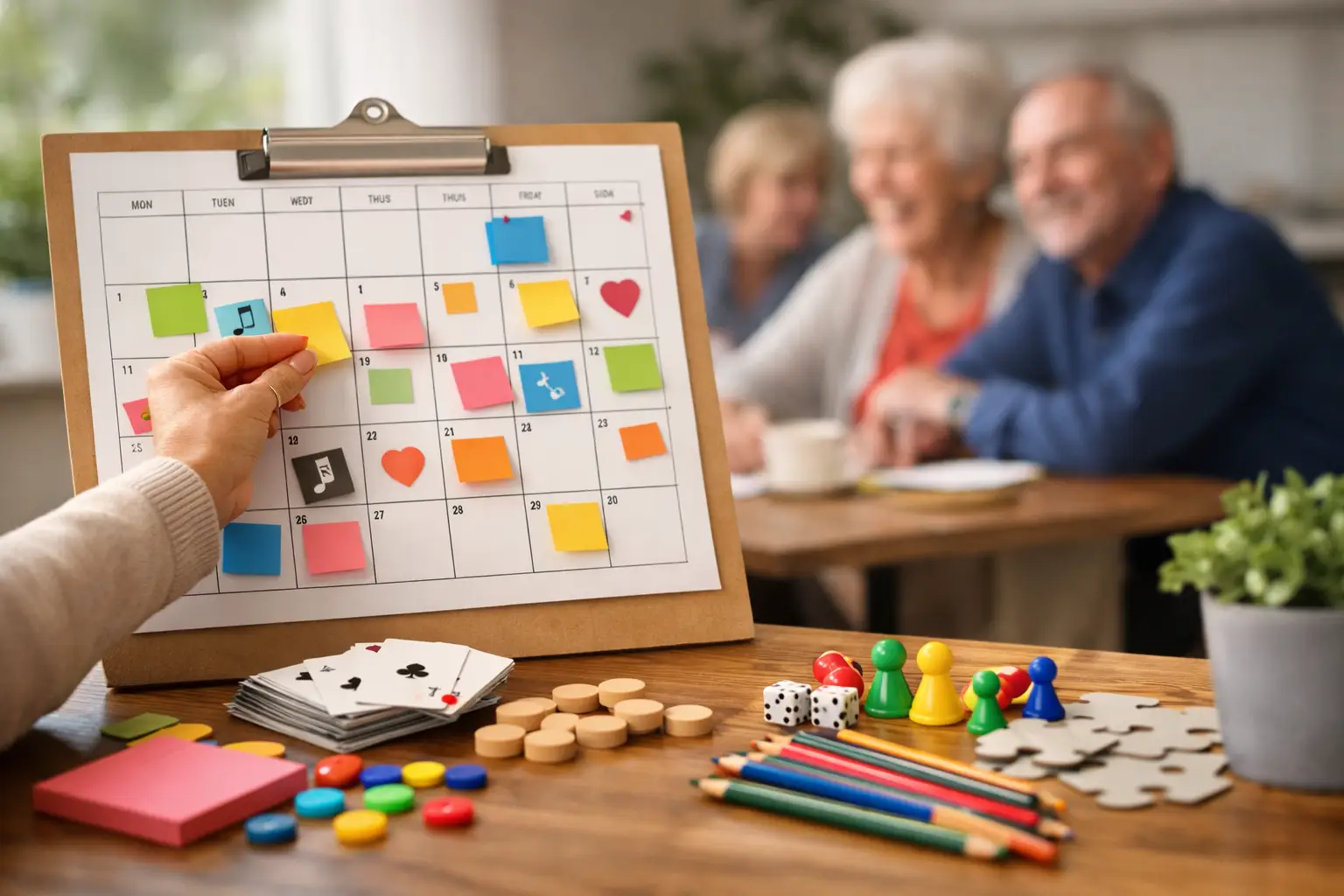
A good monthly calendar can change the feel of a senior living community faster than almost anything else. The best senior living activity calendar ideas do more than fill time. They create routine, encourage friendships, support memory, and give residents something to look forward to each day.
For families comparing assisted living or memory care in Central Florida, activities are not a small detail. They are part of quality of life. A thoughtful calendar can help a new resident settle in, reduce isolation, and bring dignity and comfort to everyday living. It also shows whether a community truly understands the people it serves.
What makes senior living activity calendar ideas effective?
A strong activity calendar starts with a simple question: what will help residents feel engaged, capable, and included? That answer looks different in assisted living than it does in memory care, and it may even vary from one resident to the next.
Some residents enjoy group games, live music, and outings. Others prefer quieter options like gardening, crafts, devotional time, or one-on-one conversation. The most effective calendars balance energy levels, physical ability, cognitive needs, and personal history. A packed calendar is not always a better one. Too much stimulation can be tiring, especially for residents with dementia.
That is why the best communities build around rhythm, not just variety. Familiar weekly favorites matter. Residents often feel more secure when they know Tuesday means bingo, Thursday means chair exercise, or Sunday includes worship services. Predictability can be especially comforting in memory care, where routine often supports a greater sense of calm.
Activity calendar ideas for assisted living
In assisted living, the goal is usually to offer choice, social connection, and opportunities for residents to stay active in ways that feel meaningful. Physical activities do not have to be intense to be valuable. Chair yoga, stretching classes, walking clubs, balloon volleyball, and simple movement sessions can all encourage mobility and confidence.
Social activities are just as important. Coffee chats, birthday celebrations, card games, movie afternoons, and themed lunches give residents natural opportunities to connect. These moments may look small from the outside, but they often make a large difference for someone adjusting to community life.
Creative programming also deserves a place on the calendar. Painting, seasonal crafts, baking demonstrations, flower arranging, and music appreciation can help residents express themselves and enjoy a sense of accomplishment. The best activities are not graded by skill. They are designed so everyone can participate at their own level.
Purpose-driven activities often stand out the most. Residents may enjoy helping fold towels, watering plants, writing cards, assembling welcome bags, or participating in simple volunteer projects. Even in a care setting, people want to feel useful. That feeling matters.
Senior living activity calendar ideas for memory care
Memory care calendars need a more specialized approach. Activities should be structured, calming, and adapted for shorter attention spans or changing abilities. Success is not measured by how complex an activity is. It is measured by whether it brings comfort, reduces frustration, and encourages engagement.
Music is often one of the most effective tools in memory care. Sing-alongs, familiar hymns, rhythm activities, and live performances can reach residents in powerful ways. Even when conversation becomes difficult, music can still spark recognition and joy.
Sensory activities are also helpful. Hand massages, textured crafts, aromatherapy, sorting activities, and nature-based experiences can support focus without creating pressure. Residents living with dementia may respond better to simple, hands-on experiences than to games with many rules.
Reminiscence activities can bring meaning to the day when handled gently. Looking through old-style photographs, talking about favorite holidays, discussing past jobs, or sharing memories connected to food and music may encourage conversation and emotional connection. The key is flexibility. If an activity brings stress or confusion, staff should be ready to redirect rather than push through.
Household-style tasks often work well too. Folding washcloths, setting tables, pairing socks, or arranging flowers can feel familiar and reassuring. These activities support dignity because they connect residents with lifelong roles and routines rather than treating them like passive participants.
Building a monthly calendar that feels balanced
The strongest calendars mix active and quiet times throughout the day. Mornings may be better for exercise, brain games, or outings when energy is higher. Afternoons often work well for music, crafts, or social gatherings. Evenings usually call for a slower pace, such as devotional time, movies, or calming sensory activities.
Variety matters, but balance matters more. If every day is loud or highly social, some residents may withdraw. If every activity is passive, others may become bored. A well-planned calendar usually includes movement, creativity, spiritual support, entertainment, cognitive stimulation, and rest.
Seasonal themes can keep programming fresh without making it complicated. In Central Florida, communities can build around spring gardening, summer socials, fall festivals, and holiday events while also taking advantage of milder weather for patio programs or supervised outdoor time. Local touches can make a community feel more connected to home.
It also helps to offer activities in different group sizes. Large events can create excitement, but smaller groups often allow for better participation, especially for residents who are shy, hard of hearing, or living with memory loss. One-on-one engagement should still have a place on the calendar, even if it is not always the most visible part.
How families can evaluate a community’s calendar
When families tour a community, it is worth looking beyond the printed schedule. A beautiful calendar on paper does not always tell the full story. Ask whether activities are actually adapted for different ability levels, how often residents are encouraged to participate, and what happens if someone prefers quieter engagement.
It is also helpful to notice whether residents seem involved and comfortable during activities already in progress. Are staff members warm and encouraging? Do they know residents by name? Are people participating because the activity is meaningful, or just because it is scheduled?
For memory care, families should ask more detailed questions. How are activities adjusted for cognitive changes? Are there sensory options? Is there a calm environment if a resident becomes overwhelmed? These questions can reveal a great deal about a community’s day-to-day care philosophy.
A good calendar should reflect the same values families want in every other part of care: dignity, comfort, and value. That means residents are not simply being kept busy. They are being supported in ways that respect who they are.
Why personalization matters more than perfection
No single list of senior living activity calendar ideas will fit every resident. A former teacher may enjoy reading groups and trivia. A retired mechanic may prefer hands-on projects or discussions about cars and tools. Someone else may care most about worship services, gardening, or simply sitting outside with a small group.
That is why personalization matters more than creating the most impressive-looking schedule. The right calendar is not the busiest one. It is the one that helps residents feel seen.
This is especially important during the first few weeks after move-in. New residents may not join group activities right away, and that does not mean the effort is failing. Adjustment takes time. Gentle invitations, familiar routines, and activities tied to personal interests often work better than pressure.
At Gold Choice Senior Communities, that understanding is part of what families should look for in any assisted living or memory care setting. A community earns trust when its life enrichment program supports the whole person, not just the schedule.
Simple ideas that often make the biggest difference
Some of the most successful activities are the least complicated. Morning coffee on the porch, a favorite song before lunch, a weekly ice cream social, or a small gardening project can become the moments residents talk about most. Familiar pleasures build community.
The best calendars also leave room for flexibility. Weather changes. Energy levels change. Residents have good days and harder days. A thoughtful team knows when to follow the plan and when to adapt it.
Families do not need to look for constant entertainment. They should look for evidence of care, intention, and consistency. A well-designed activity calendar says something reassuring: this community understands that meaningful days are part of meaningful care.
If you are comparing options for a loved one, ask to see the calendar, but also ask what those activities feel like in real life. The answer can tell you a great deal about whether a community will truly feel like home.